
“The strongest commercial roofs rarely attract attention. Their greatest achievement is allowing everything beneath them to succeed without interruption.”
The Architecture of Quiet Strength
Low-slope roofing has become the defining choice for modern commercial architecture because it combines elegant simplicity with exceptional practicality. Warehouses, office complexes, healthcare facilities, educational campuses, retail centers, and industrial buildings all benefit from roofing systems capable of supporting demanding operational requirements while maintaining a clean architectural profile. The beauty of these systems lies in what most people never see. Beneath the finished membrane is an integrated assembly where every component serves a carefully engineered purpose. Insulation regulates thermal performance throughout changing seasons. Drainage pathways guide water efficiently away from the structure. Flashing protects vulnerable transitions around rooftop equipment. Membranes create a continuous barrier against moisture while accommodating natural movement caused by changing temperatures. Together, these components create a roofing system that functions with remarkable precision. Rather than relying on a single material, performance emerges from the relationship between every layer. When each element has been thoughtfully designed and professionally installed, the result is a roof capable of protecting the building quietly for decades. True sophistication often exists beneath the surface, where thoughtful engineering quietly outperforms unnecessary complexity.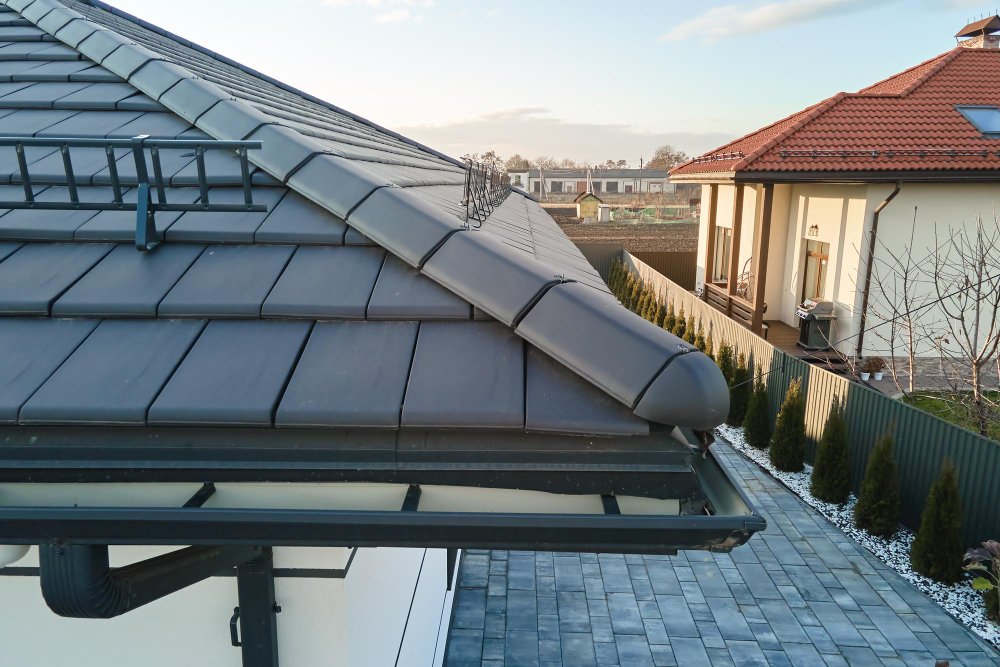
Every Layer Has a Purpose
One of the defining characteristics of a premium commercial roof is intentional design. Nothing exists by accident. Every membrane seam, insulation board, flashing detail, fastening system, and drainage component contributes to the integrity of the complete roofing assembly. For this reason, selecting a roofing system involves much more than choosing a membrane type. The building itself becomes part of the design conversation. Its structural layout, rooftop equipment, climate exposure, maintenance requirements, and long-term operational goals all influence how the roofing system should be engineered. Carefully designed low-slope roofs also create opportunities for improved energy efficiency, simplified maintenance access, and dependable waterproofing. Their broad, accessible surfaces accommodate HVAC systems, communication equipment, solar installations, and future building modifications while continuing to provide reliable protection throughout years of service. Luxury in commercial construction is rarely about appearance alone. It is about creating systems that continue performing beautifully long after the excitement of construction has passed.“Enduring craftsmanship is measured not by the day a roof is completed, but by every season it quietly withstands afterward.”
Designing for Decades, Not Seasons
The finest commercial roofs are never designed with next year’s weather in mind alone. They are created to support decades of changing conditions, evolving business needs, and continuous daily operations. Every design decision considers not only immediate performance but also how the roofing system will respond to years of sunlight, seasonal storms, rooftop maintenance activity, and the natural movement of the building itself. This long-term perspective separates a dependable roofing investment from a temporary solution. Rather than focusing solely on installation day, experienced roofing professionals evaluate how the entire system will perform throughout its service life. Drainage must continue directing water efficiently after countless storms. Flashing must remain secure despite repeated thermal movement. Insulation must continue supporting energy efficiency through changing temperatures. The roofing membrane must maintain its integrity despite years of environmental exposure. For commercial property owners, this thoughtful approach provides something even more valuable than durability. It provides predictability. Planned maintenance replaces emergency repairs. Routine inspections replace unexpected surprises. Investments become easier to forecast because the roof has been designed as a long-term asset rather than a short-term construction project. Organizations that invest in professionally engineered Commercial Roofing Systems recognize this distinction. They understand that a roof should not simply survive the next season—it should continue protecting the building, supporting operations, and preserving valuable assets for many years to come. Every carefully selected material and every precisely installed detail contributes to that larger objective. The most remarkable commercial buildings are supported by systems designed with patience, foresight, and respect for the future they are expected to protect.“A well-designed roof becomes part of a building’s legacy, quietly protecting every success achieved beneath it.”